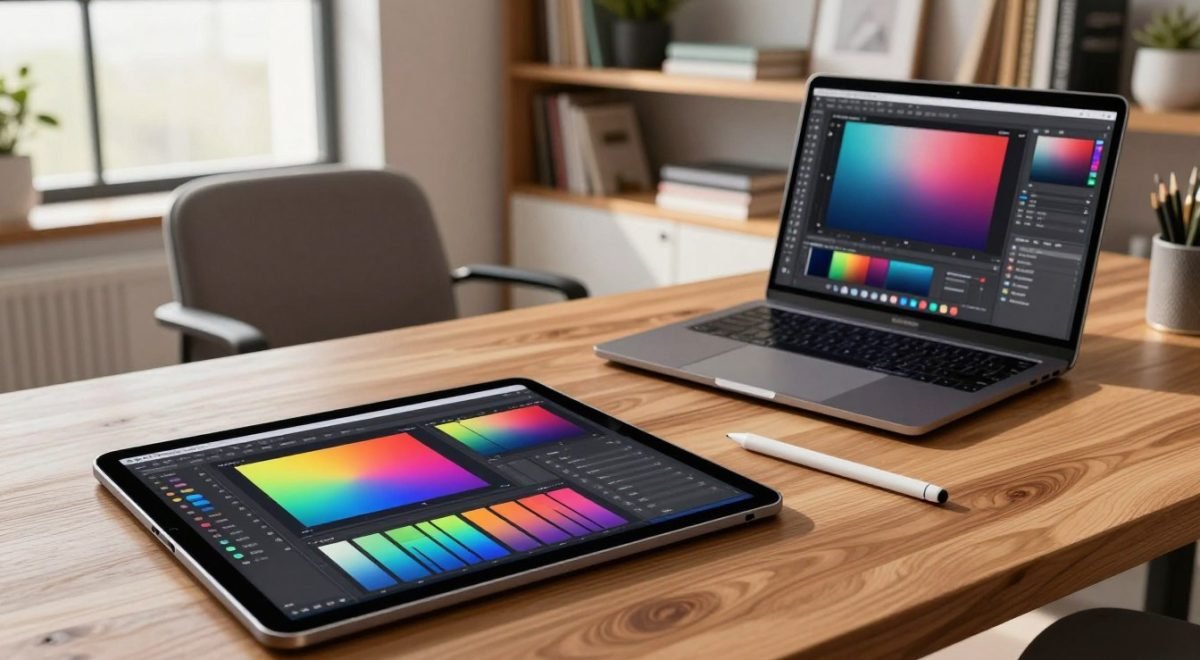
As we enter 2026, the landscape of creative technology has undergone a massive transformation. What once felt like experimental novelties have now become essential components of high-end workflows.
Modern professionals are rapidly adopting the best ai tools for designers to streamline their daily operations. These systems allow creators to automate repetitive tasks while preserving their unique artistic integrity.
By integrating the best ai software for creatives, studios can focus more on strategy and conceptual development. This shift empowers teams to produce high-quality visual assets with unprecedented speed and precision.
This article serves as a comprehensive resource for identifying the most effective graphic design ai tools currently available. We will explore how these innovations redefine the boundaries of digital artistry.
Key Takeaways
- Artificial intelligence has transitioned from a niche experiment to a core industry standard.
- Automation allows creative professionals to reclaim time spent on mundane, repetitive tasks.
- Maintaining artistic intent remains the primary goal when using machine-learning platforms.
- Modern software solutions now offer seamless integration into existing professional design pipelines.
- Strategic adoption of new technology provides a significant competitive advantage in the current market.
The Evolution of AI in Modern Graphic Design
The integration of smart technology has changed the creative industry more in ten years than in the previous century. This rapid shift has fundamentally altered the trajectory of how professionals build visual assets. Today, ai design software serves as a powerful partner rather than a replacement for human talent.
Modern workflows now allow artists to iterate on complex concepts at speeds that were previously impossible with traditional manual methods. By leveraging the best ai software for creatives, designers can bypass repetitive tasks and focus on high-level strategy. This efficiency gain is essential for staying competitive in a fast-paced digital market.
As we evaluate the current landscape, it becomes clear that the focus has shifted toward collaborative intelligence. Rather than seeking total automation, the industry is embracing tools that augment human intuition. These graphic design ai tools empower creators to push boundaries while maintaining full control over their unique creative vision.
Ultimately, the evolution of these systems represents a new era of artistic freedom. By adopting the right graphic design ai tools, professionals can explore more variations in less time. Choosing the best ai software for creatives is no longer just an option; it is a necessity for those who want to lead in the modern design space.
Criteria for Selecting the Best AI Tools for Designers
Selecting the best ai tools for designers involves more than just checking for the latest features. Professionals must prioritize platforms that offer seamless integration with existing industry-standard software suites. This ensures that your current workflow remains fluid while adopting new, powerful capabilities.
When evaluating the best ai software for creatives, look for robust customization options. These features allow you to generate unique, brand-specific visual outputs that align with your client’s identity. True creative control is essential when working on high-stakes projects that require a distinct aesthetic.
The most effective graphic design ai tools are those that enhance human intuition rather than attempting to replace the designer’s unique perspective. You should always consider the ethical implications of the software, specifically regarding how the underlying models source their training data. Transparency in data usage is a hallmark of professional-grade technology.
“The role of the designer is to curate and refine, using technology as a bridge between raw imagination and polished reality.”
Ultimately, your choice should be guided by how well a tool fits into your daily routine. Efficiency and quality must go hand in hand to justify the investment in new digital assets. By focusing on these core criteria, you can build a tech stack that empowers your creative vision for years to come.
Adobe Firefly for Generative Creative Workflows
As a leader in digital innovation, Adobe Firefly changes the landscape for enterprise-level creative production. This platform serves as a vital bridge between traditional design methods and the future of automated content generation.
Adobe Firefly
Adobe Firefly has established itself as a cornerstone for professional teams. By focusing on commercially safe imagery, it provides peace of mind for agencies that must adhere to strict legal standards. This ai software for graphic designers is trained exclusively on Adobe Stock assets, ensuring that every output is ready for high-stakes commercial use.
Overview
The platform functions as a generative engine embedded directly into the Creative Cloud. It allows users to create high-quality visuals, textures, and effects without leaving their familiar workspace. It is widely considered one of the most advanced ai tools for creatives currently available on the market.
Pros
- Deep integration with existing Creative Cloud applications.
- Non-destructive editing capabilities for maximum flexibility.
- High-quality, legally cleared training data.
Cons
While powerful, the tool requires an active subscription to the Adobe ecosystem. Some users may also find that the generative results require fine-tuning to match specific brand guidelines perfectly.
Features
Designers can leverage several key capabilities to streamline their daily tasks. These include generating complex lighting effects, creating unique vector variations, and producing high-fidelity textures from simple text prompts. By utilizing these advanced ai tools for creatives, professionals can significantly reduce the time spent on repetitive manual labor.
Midjourney for High-Fidelity Visual Concepting
When it comes to high-fidelity visual concepting, few platforms match the artistic depth of Midjourney. This platform has become a cornerstone for professionals who need to translate abstract ideas into stunning imagery quickly.
Midjourney
Midjourney is widely recognized as one of the top artificial intelligence tools available for modern visual artists. It excels at interpreting complex prompts to produce textures, lighting, and compositions that feel hand-crafted rather than machine-generated.
Overview
The platform operates primarily through a text-to-image interface that prioritizes artistic flair. It is designed to assist creators in building mood boards, character designs, and environmental concepts that define the visual direction of a project.
Pros
Many professionals choose this ai software for graphic designers because of its unparalleled control over atmospheric lighting. It significantly reduces the time required for traditional rendering, allowing for rapid iteration during the brainstorming phase.
Cons
While powerful, the platform requires a learning curve to master specific prompting techniques. Users may also find that generating consistent characters across multiple images requires advanced knowledge of seed parameters and style references.
Features
These advanced ai tools for creatives offer a suite of features that cater to high-end production needs. Key capabilities include style tuning, aspect ratio control, and the ability to blend multiple images into a single cohesive output.
| Feature | Midjourney | Standard Rendering |
|---|---|---|
| Speed | Seconds | Hours/Days |
| Artistic Style | High Variety | Manual |
| Control | Prompt-based | Full Manual |
| Workflow | Iterative | Linear |
Figma with AI-Powered Design Systems
Figma has redefined the collaborative landscape by integrating machine learning directly into the design process. These graphic design ai programs allow teams to automate the generation of component variants and layout adjustments, significantly reducing manual labor. By leveraging these capabilities, designers can focus on high-level strategy rather than repetitive technical tasks.
Figma
Overview
Figma serves as a central hub for digital product teams, offering a cloud-based environment that bridges the gap between design and development. As ai software for graphic designers continues to evolve, the platform has incorporated intelligent features to maintain design system integrity. It ensures that large-scale digital products remain consistent across every screen and device.
Pros
- Real-time collaboration that allows multiple designers to work on the same file simultaneously.
- Automated layout adjustments that save hours of manual resizing and alignment.
- Seamless handoff processes that translate design intent into developer-ready code.
Cons
- Requires a stable internet connection for full functionality and cloud syncing.
- Steep learning curve for teams transitioning from traditional, static design tools.
- Advanced features often require a premium subscription tier for enterprise-level access.
Features
The platform utilizes advanced ai tools for creatives to streamline complex workflows. These features include smart component variants, automated design tokens, and intelligent prototyping tools that predict user interaction patterns.
| Feature Category | Manual Workflow | AI-Powered Workflow |
|---|---|---|
| Component Updates | Manual editing per instance | Global automated sync |
| Layout Resizing | Manual pixel adjustments | Responsive auto-layout |
| Design Handoff | Static documentation | Live code inspection |
| System Scaling | High risk of inconsistency | Strict design governance |
Canva Magic Studio for Rapid Asset Production
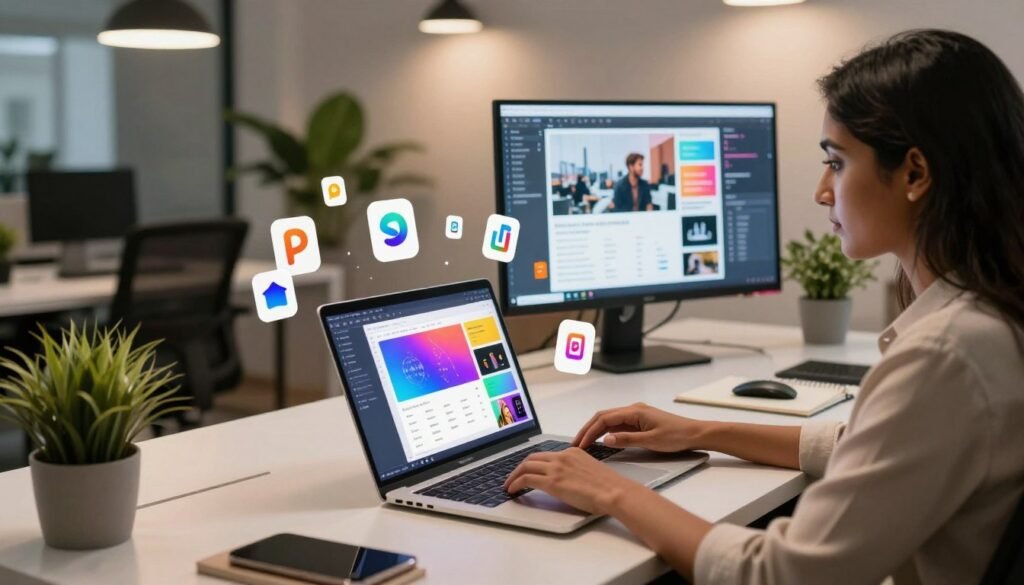
In the fast-paced world of digital marketing, efficiency is the ultimate currency for creative professionals. Canva Magic Studio has emerged as a game-changer for teams looking to streamline their visual production workflows while maintaining high standards.
This platform stands out among graphic design ai programs by offering a seamless bridge between complex automation and user-friendly interfaces. It allows marketing departments to scale their output without needing a massive team of specialists.
Magic Studio Capabilities
Overview
Magic Studio acts as a comprehensive ecosystem for visual content creation. It integrates innovative tools for designers to handle repetitive tasks, allowing users to focus on high-level strategy and creative direction.
Pros
- Unmatched Speed: Drastically reduces the time required to produce social media assets.
- Brand Consistency: Centralized controls ensure that every generated graphic aligns with company guidelines.
- Accessibility: The ai-powered design software is intuitive enough for non-designers to master quickly.
Cons
While highly efficient, the platform may lack the granular control required for complex, high-fidelity artistic illustrations. Professional designers might find the automated outputs somewhat restrictive for bespoke, high-end branding projects.
Features
The suite includes powerful utilities such as automated background removal, intelligent image expansion, and text-to-graphic generation. These innovative tools for designers simplify workflows that previously required hours of manual editing.
| Feature | Primary Benefit | User Level |
|---|---|---|
| Magic Switch | Instant format resizing | Beginner to Pro |
| Magic Media | Text-to-image generation | Intermediate |
| Magic Eraser | Object removal | Beginner |
| Brand Hub | Asset management | Professional |
By leveraging this ai-powered design software, organizations can maintain a consistent visual presence across all digital channels. It remains one of the most effective graphic design ai programs for teams prioritizing rapid asset production.
Top Artificial Intelligence Tools for Vector Illustration
Vector illustration is currently undergoing a massive transformation thanks to the rise of intelligent automation. These top artificial intelligence tools allow creators to convert rough raster sketches into clean, scalable paths with incredible speed. By automating the technical side of design, artists can dedicate more energy to the creative vision.
The primary advantage of these innovative tools for designers lies in their ability to handle complex anchor point placement. Manually tracing intricate shapes often consumes hours of billable time in a professional studio environment. Modern platforms now optimize these paths automatically, ensuring that every curve remains smooth and mathematically precise.
The current generation of ai-powered design software is capable of interpreting complex artistic styles and translating them into professional vector formats. Whether you are working on typography, logos, or detailed illustrations, these systems maintain the integrity of your original concept. This shift represents a significant leap forward for digital production pipelines.
Adopting these top artificial intelligence tools helps teams maintain consistency across large-scale projects. When software manages the technical constraints, designers can focus on refining the aesthetic quality of their work. This synergy between human creativity and machine precision is defining the future of the industry.
By integrating these innovative tools for designers, studios can significantly reduce the time spent on tedious manual tracing. The following table highlights key features found in leading solutions currently available on the market.
| Tool Name | Primary Strength | Best Use Case |
|---|---|---|
| Vectorizer.ai | High-fidelity tracing | Logo conversion |
| Adobe Illustrator AI | Integrated workflow | Complex illustrations |
| Vector Magic | Precision control | Technical diagrams |
Ultimately, the rise of ai-powered design software ensures that high-quality vector assets are more accessible than ever. As these technologies continue to evolve, the barrier between a hand-drawn sketch and a production-ready vector file will continue to shrink.
Runway for AI-Driven Motion Graphics
Runway stands out as a premier choice for creators who want to push the boundaries of visual storytelling. It has become the gold standard for professionals looking to integrate machine learning design tools into their video editing pipelines.
Runway
This platform bridges the gap between complex visual effects and accessible creative workflows. By leveraging advanced algorithms, it allows artists to produce cinematic sequences that were once reserved for high-end production studios.
Runway serves as one of the most innovative tools for designers who need to generate high-impact motion content. It simplifies the process of creating video assets through intuitive text-to-video and image-to-video prompts.
Pros
- High-quality output: Produces professional-grade visual effects with minimal manual effort.
- Speed: Dramatically reduces the time required for complex rendering and compositing tasks.
- Versatility: Offers a wide range of creative modes suitable for various digital campaigns.
Cons
While the platform is powerful, it requires a stable internet connection for cloud-based processing. Users may also face a learning curve when mastering the specific prompt engineering required for consistent results.
Features
This ai-powered design software includes a robust set of features designed to streamline production. Key capabilities include:
- Frame Interpolation: Smooths out motion for high-fidelity video sequences.
- Style Transfer: Applies artistic aesthetics to existing footage effortlessly.
- Object Removal: Cleans up frames by automatically masking and removing unwanted elements.
Uizard for Automated UI and UX Prototyping
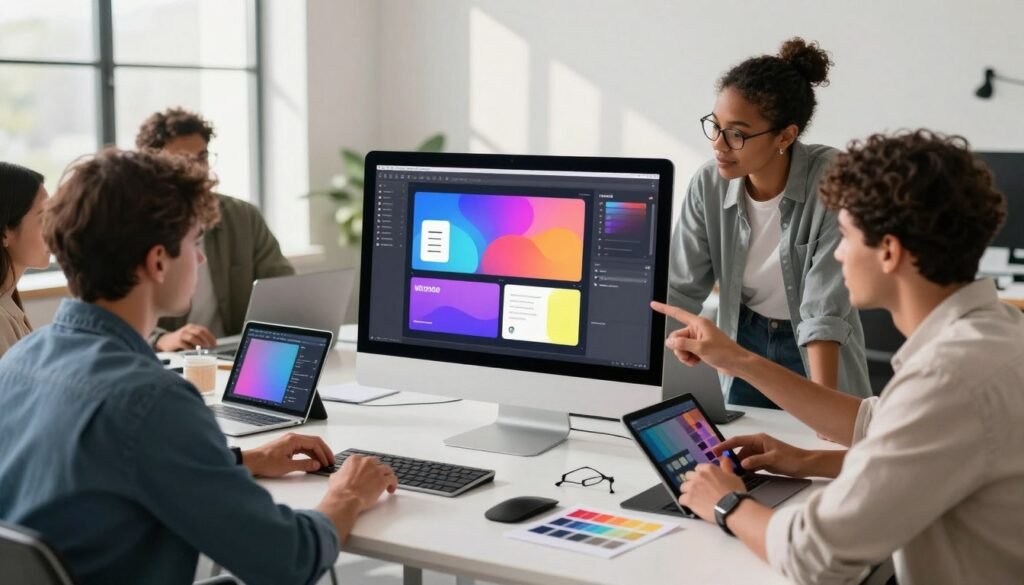
Uizard stands out among graphic design ai programs by bridging the gap between paper concepts and digital reality. It empowers teams to move from initial brainstorming to functional prototypes in a fraction of the time required by traditional methods.
Uizard
Overview
This platform is specifically engineered to simplify the early stages of the product design lifecycle. By utilizing advanced machine learning, it converts hand-drawn sketches into editable digital interfaces instantly. This capability allows designers to iterate on user flows and layouts with unprecedented speed.
Pros
One of the primary benefits of these ai design solutions is the ability to validate concepts with stakeholders early. It significantly reduces the time spent on manual wireframing. Furthermore, the platform fosters better collaboration between developers and designers by providing a shared visual language.
Cons
While highly efficient for early-stage work, the tool may present a learning curve for those accustomed to complex, high-fidelity software. Users might find that it lacks the granular control required for highly custom, pixel-perfect animations. It is best utilized as a rapid prototyping engine rather than a final production suite.
Features
Uizard is widely considered one of the top tools for graphic designers who focus on mobile app development. Its core features include an intuitive drag-and-drop editor, automated sketch-to-UI conversion, and real-time team collaboration. These features ensure that design teams remain agile throughout the development process.
| Feature | Uizard Capability | Impact |
|---|---|---|
| Sketch Conversion | High | Saves hours of manual work |
| Collaboration | Real-time | Improves team alignment |
| UI Components | Extensive | Speeds up layout creation |
| Learning Curve | Low | Fast onboarding for teams |
Topaz Photo AI for Advanced Image Enhancement
In the fast-paced world of digital creation, maintaining visual integrity is a constant challenge for professionals. High-quality imagery often suffers from compression artifacts or low resolution, which can derail a project’s final impact. This is where specialized software steps in to bridge the gap between raw capture and professional output.
Enhancing Visual Fidelity
Topaz Photo AI stands out as one of the top artificial intelligence tools available for modern creators. It functions as an essential utility for those who need to restore, upscale, or sharpen imagery that would otherwise be unusable. By utilizing sophisticated models, the software recovers fine details that are frequently lost during digital processing.
“The ability to recover lost detail from legacy assets is not just a convenience; it is a fundamental requirement for high-end visual storytelling in the modern era.”
Overview
This platform serves as a comprehensive solution for image restoration. It automates complex tasks like noise reduction and face recovery, allowing designers to focus on creative direction rather than technical cleanup. These ai design solutions are particularly effective for professionals working with legacy assets that require significant restoration for high-resolution print output.
Pros
- Exceptional detail recovery for low-resolution files.
- Seamless integration into existing creative workflows.
- Automated sharpening that preserves natural textures.
Cons
- Requires significant hardware resources for optimal performance.
- Processing time can be lengthy for batch operations.
- Steeper learning curve for advanced model adjustments.
Features
The software offers a robust suite of features designed to meet the needs of demanding projects. It remains one of the top tools for graphic designers who demand pixel-perfect quality in every single output.
| Feature | Primary Benefit | Use Case |
|---|---|---|
| Sharpening | Restores motion blur | Action photography |
| Denoising | Removes digital grain | Low-light captures |
| Upscaling | Increases resolution | Large-format printing |
| Face Recovery | Fixes blurry portraits | Legacy restoration |
Integrating Machine Learning Design Tools into Professional Pipelines
Professional design teams are finding that the key to efficiency lies in how they integrate advanced machine learning design tools into their daily operations. A successful transition requires a clear strategy that prioritizes both workflow management and comprehensive team training. By preparing staff to work alongside these systems, agencies can ensure a smooth adoption process that minimizes disruption.
Designers must learn how to balance the impressive speed of the best ai tools for designers with the essential need for human oversight. While automation handles repetitive tasks, the human eye remains critical for maintaining brand consistency and emotional resonance. Quality control should never be sacrificed for the sake of rapid output.
Adopting these technologies allows agencies to optimize their production cycles significantly. When mundane tasks are automated, creative professionals can shift their focus toward high-level creative strategy and complex problem-solving. This shift not only improves the quality of the final output but also increases overall job satisfaction for the design team.
Implementing these machine learning design tools effectively is a long-term investment in the agency’s future. It requires ongoing evaluation of which processes benefit most from automation versus those that require a purely manual touch. Teams that master this balance will find themselves better equipped to handle larger project volumes without burning out.
Ultimately, utilizing these ai design solutions allows teams to remain competitive in an increasingly fast-paced digital market. Staying ahead means embracing innovation while keeping the core principles of design at the forefront of every project. By combining human creativity with machine precision, agencies can deliver exceptional results that stand out in a crowded landscape.
Conclusion
The creative industry moves toward a future defined by rapid technological shifts. Professionals who embrace modern ai design software gain a distinct edge in a competitive market.
Mastering these platforms allows you to push boundaries and explore new artistic territories. You can now turn complex visions into reality with greater speed and precision than ever before.
Adopting machine learning design tools is a vital step for any artist aiming to stay relevant. These systems handle repetitive tasks, which frees your schedule for high-level conceptual thinking.
The top tools for graphic designers continue to evolve at a breakneck pace. Staying informed about these updates ensures your work remains fresh and impactful.
Experiment with these technologies today to see how they transform your unique process. Share your favorite workflows with peers to help build a stronger community of digital creators.
FAQ
What are the best ai tools for designers to use in 2026?
Why is Adobe Firefly considered a leading ai software for graphic designers?
Which are the top artificial intelligence tools for high-fidelity visual concepting?
How can machine learning design tools improve the UI/UX prototyping process?
What should I look for when selecting the best ai software for creatives?
Are there specific ai design solutions for image restoration and enhancement?
How does Canva Magic Studio facilitate rapid asset production?
How is ai-powered design software changing the field of motion graphics?
f you have any questions, feel free to Contact Us.
this