

As we approach 2026, the digital landscape is shifting at an incredible pace. Businesses now face immense pressure to produce high-quality media consistently to stay relevant. Relying on manual workflows is no longer enough to keep up with audience demands.
Implementing video content automation has become a vital strategy for brands aiming to maintain a competitive edge. By streamlining repetitive tasks, teams can focus on creative strategy rather than technical bottlenecks.
Scaling production effectively requires the right infrastructure. Modern video content creation tools allow companies to generate professional assets in a fraction of the time. These platforms are defining the new industry standard for efficiency.
Adopting these solutions is no longer optional for those who want to thrive in a crowded marketplace. This guide explores the top software options that will help your team succeed this year.
Key Takeaways
- Efficiency is the primary driver for modern digital production strategies.
- Manual workflows are becoming obsolete in the face of rapid scaling needs.
- Advanced software helps teams maintain high quality while increasing output volume.
- Strategic implementation of new technology provides a distinct competitive advantage.
- Choosing the right platform is essential for long-term growth and brand consistency.
The Evolution of Video Content Automation
The journey toward efficient video production has evolved from tedious manual tasks to seamless, AI-driven workflows. In the past, editors spent countless hours on frame-by-frame adjustments and manual rendering. Today, video content automation has fundamentally changed how creative teams approach their daily output.
This transition marks a departure from labor-intensive processes that once limited the scale of digital media. Modern video content management systems now integrate directly with artificial intelligence to handle repetitive tasks. By automating these workflows, companies can reduce production time by significant margins, allowing creators to focus on high-level strategy.
The shift toward high-efficiency video production automation is no longer just a luxury for large studios. It has become a core requirement for any organization aiming to remain relevant in a fast-paced digital age. Businesses that fail to adopt these tools risk falling behind competitors who leverage AI to scale their messaging.
Effective video content management requires a deep understanding of how these new technologies interact with existing pipelines. By embracing video content automation, teams can ensure consistency across all platforms while maintaining a high standard of quality. Ultimately, the move toward video production automation empowers professionals to produce more content with fewer resources, driving better engagement and growth.
Key Benefits of Implementing Automated Video Creation
Integrating automated video creation into your marketing strategy offers a significant competitive advantage in today’s fast-paced digital landscape. By shifting away from manual editing processes, businesses can maintain consistent brand messaging across all channels. This transition allows teams to scale their output volume dramatically without the need for proportional increases in headcount.
Effective video content management serves as the backbone of this transformation. When assets are organized through automated systems, teams spend less time searching for files and more time focusing on creative strategy. This streamlined approach ensures that every piece of media aligns perfectly with your established brand guidelines.
One of the most immediate impacts of video content automation is the reduction in project turnaround times. High-priority campaigns that once took weeks to produce can now be finalized in a fraction of the time. This agility is essential for companies that need to respond quickly to market trends or social media shifts.
Adopting video production automation also delivers a clear and measurable return on investment. By reducing the labor-intensive aspects of production, departments can reallocate their budgets toward higher-level creative initiatives. The following table highlights the primary operational improvements observed by organizations that have made the switch:
| Metric | Manual Process | Automated Process |
|---|---|---|
| Production Speed | Slow/Variable | High/Consistent |
| Resource Usage | High Headcount | Optimized Workflow |
| Brand Consistency | Difficult to Maintain | Automated Compliance |
Ultimately, the move toward smarter production workflows empowers teams to produce more content with greater precision. Embracing these tools is no longer just an option; it is a necessity for staying relevant in a crowded digital marketplace.
Criteria for Selecting Professional Video Production Software
Navigating the crowded market of video production software demands a clear set of evaluation criteria. To ensure your investment yields long-term value, you must look beyond basic features and consider how a tool fits into your broader digital strategy.
Scalability remains a top priority for growing teams. You need a platform that handles increasing volumes of assets without sacrificing performance or speed. Effective video content management requires a system that grows alongside your output requirements.
Integration capabilities are equally vital for maintaining a smooth workflow. The best tools connect seamlessly with your existing tech stack, such as cloud storage, project management platforms, and social media scheduling apps. By prioritizing video production automation, you reduce manual bottlenecks and allow your creative team to focus on high-level strategy.
When evaluating the quality of AI-driven output, test the software with your specific brand assets. High-quality automated video creation should maintain brand consistency while offering enough flexibility for unique campaign needs. Consider these essential factors before making your final selection:
- Technical Proficiency: Does the interface match your team’s current skill level?
- Integration Depth: Can the software communicate with your current CRM or CMS?
- Output Quality: Does the AI generate professional-grade visuals and audio?
- Scalability: Will the platform support your production volume in two years?
- Support and Training: Are there adequate resources to help your team master the tool?
Ultimately, the right choice balances advanced video production automation with user-friendly design. By applying this framework, you ensure that your chosen video production software supports your long-term video content management goals and enhances your overall automated video creation efforts.
Descript: AI-Powered Editing and Transcription
Descript has revolutionized the way creators approach video production by treating media like a simple text document. This innovative video creation platform allows users to edit their footage by modifying the underlying transcript, making the process feel as natural as writing an email.

Overview
By leveraging advanced speech-to-text technology, Descript streamlines the post-production workflow for podcasters and video producers alike. It serves as one of the most effective video content creation tools for those who need to produce high-quality media without spending hours on manual timeline adjustments.
Pros
The primary advantage of this software is its unmatched efficiency in cutting clips. Users can remove unwanted sections by deleting text, which automatically updates the video track. Additionally, the platform offers high-accuracy transcription that saves significant time during the initial review phase of automated video creation.
Cons
While the interface is intuitive, traditional editors may find the text-based workflow requires a slight adjustment period. Furthermore, the advanced features are locked behind a subscription model, which might be a consideration for independent creators on a strict budget.
Features
Descript provides a suite of powerful capabilities designed to enhance your final output. Key features include:
- Overdub: A tool that allows you to fix audio mistakes by typing new words in your own voice.
- Studio Sound: An AI video editing feature that removes background noise and enhances audio quality to professional levels.
- Filler Word Removal: A smart function that detects and deletes “um,” “uh,” and other pauses with a single click.
- Automatic Video Generation: Tools that help creators quickly assemble rough cuts and social media snippets from long-form content.
HeyGen: Scaling Personalized Video Marketing Automation
HeyGen is changing how companies approach video marketing automation by using advanced digital avatars. This technology allows brands to produce high-quality content without the need for expensive cameras, lighting crews, or physical studio space.
By leveraging automatic video generation, businesses can now reach global audiences with ease. The platform serves as a bridge between complex technical production and the need for rapid, scalable content delivery.
Overview
HeyGen stands out as a premier video creation platform designed for corporate training, sales outreach, and personalized marketing. It utilizes high-fidelity digital avatars that mimic human speech and gestures with remarkable accuracy.
“The future of corporate communication lies in the ability to personalize content at scale without sacrificing the human touch.”
Pros
The primary advantage of using this tool is the massive reduction in production time and costs. Teams can generate hundreds of localized videos in minutes rather than weeks.
- Scalability: Easily create content in dozens of languages.
- Consistency: Maintain brand voice across all digital assets.
- Efficiency: Eliminate the logistical hurdles of traditional filming.
Cons
While the technology is impressive, it is not without limitations. Users may occasionally encounter the “uncanny valley” effect, where the avatar feels slightly artificial to highly observant viewers.
Furthermore, these video marketing tools require a learning curve to master the nuances of avatar animation. Relying solely on synthetic media may also lack the raw emotional depth of a real human performance in certain creative contexts.
Features
The platform offers a robust suite of features tailored for enterprise needs. Below is a breakdown of the core capabilities that define the user experience:
| Feature | Description | Benefit |
|---|---|---|
| Avatar Library | Diverse digital personas | Inclusive representation |
| Voice Cloning | Custom audio synthesis | Personalized brand tone |
| API Access | Seamless software integration | Automated workflow |
Ultimately, HeyGen remains a top-tier choice for organizations prioritizing automatic video generation. It empowers marketing teams to maintain a competitive edge in an increasingly digital-first landscape.
InVideo AI: Streamlining Digital Content Automation
Digital content automation reaches a new level of efficiency with the introduction of InVideo AI. This versatile tool serves as a powerful video creation platform designed to help marketers and social media managers produce high-quality assets in minutes. By leveraging advanced artificial intelligence, the software removes the technical barriers that often slow down the creative process.
Overview
InVideo AI functions by transforming simple text prompts into fully realized video sequences. It acts as a comprehensive content automation platform, allowing users to generate scripts, select stock footage, and add voiceovers through natural language commands. This approach is ideal for teams that need to maintain a consistent publishing schedule without spending hours on manual editing tasks.
Pros
The platform is widely recognized for its ability to accelerate production timelines significantly. Users benefit from several key advantages:
- Rapid deployment: Create professional-grade videos in a fraction of the time required by traditional software.
- Intuitive interface: The natural language processing allows users to edit videos by simply typing instructions.
- Accessibility: It lowers the barrier to entry for those without formal video editing training.
Cons
While the tool excels at speed, it may not satisfy users who require granular control over every frame. Complex manual editing tasks can sometimes feel restricted compared to professional-grade desktop suites. Additionally, heavy reliance on AI-generated assets might require extra time for brand-specific customization.
Features
This video marketing automation tool is packed with features that simplify the workflow for busy professionals. Key capabilities include:
- Text-to-Video Generation: Convert written ideas into visual stories instantly.
- Smart Editing Commands: Use simple text prompts to trim, change, or enhance specific segments of your project.
- Extensive Media Library: Access a vast collection of stock footage and music to complement your narrative.
By integrating this video creation platform into your daily operations, you can focus more on strategy and less on technical execution. It remains a top choice for those prioritizing speed and scalability in their video marketing automation efforts.
Synthesia: Enterprise-Grade AI Video Generation
When it comes to enterprise-grade video marketing automation, Synthesia leads the pack with its robust feature set. This platform is specifically designed to help large organizations produce high-quality content without the need for expensive film crews or studios.
Overview
Synthesia is a powerful ai video generation tool that excels in creating professional training videos, product demonstrations, and internal communications. By leveraging advanced synthetic media, companies can transform text into engaging video presentations in minutes.
The platform is built for scale, allowing teams to update content instantly as business needs change. It serves as a reliable backbone for corporate communication strategies that require both speed and high production value.
Pros
One of the primary advantages of using these video marketing tools is the unparalleled level of brand consistency. Organizations can create custom avatars that represent their brand identity across all global offices.
- Enterprise-grade security protocols to protect sensitive corporate data.
- Seamless scalability for teams producing hundreds of videos per month.
- Extensive library of professional AI avatars and diverse voice options.
Cons
While it is a leading content automation platform, the pricing structure may be prohibitive for smaller startups or individual creators. Users might also find a slight learning curve when attempting to master the more advanced customization features available in the enterprise tier.
Features
The platform offers a suite of tools designed for automatic video generation that simplifies complex workflows. Key features include:
- Multi-language support, allowing for instant translation into over 120 languages.
- Integrated screen recording capabilities for technical tutorials and software demos.
- Collaborative workspaces that enable teams to edit and approve videos in real-time.
“Synthesia has fundamentally changed how we approach internal training by allowing us to localize content for our global workforce in a fraction of the time.”
Top Contenders for Video Content Automation in 2026
Beyond the major industry players, several specialized tools are reshaping the landscape of digital content automation in 2026. These platforms offer unique features that cater to specific production needs, allowing creators to optimize their workflows effectively. By integrating advanced ai video editing capabilities, these solutions help teams maintain high output quality without sacrificing creative control.
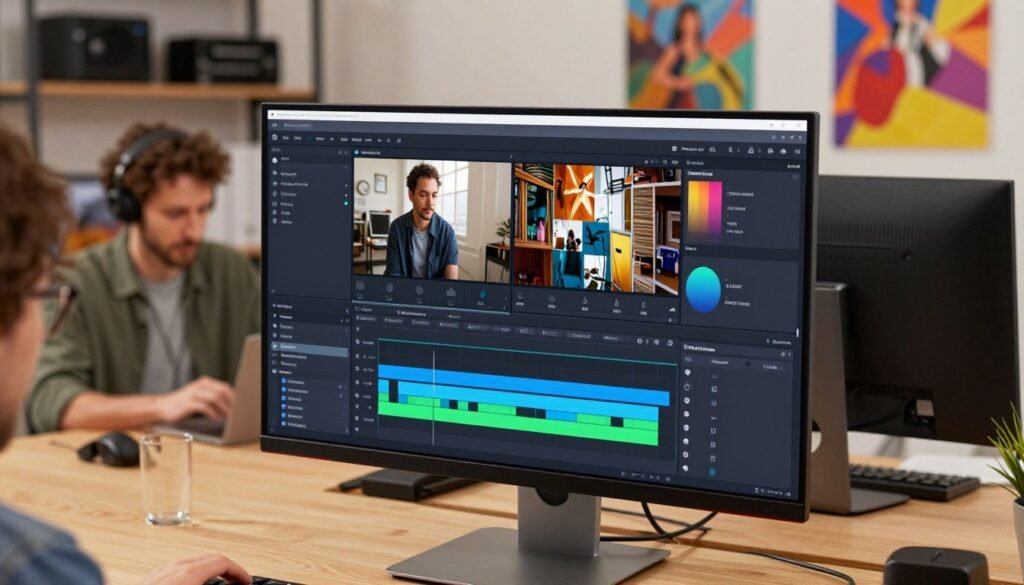
Pictory for Long-Form Repurposing
Pictory has established itself as a leader for creators who need to transform lengthy webinars or podcasts into bite-sized clips. This content automation platform excels at identifying key highlights from long-form footage automatically. It is an essential tool for those looking to maximize their reach across multiple social channels with minimal manual effort.
CapCut for Social Media Workflow Automation
CapCut remains a dominant force for social media managers who prioritize speed and trend-driven editing. Its robust suite of video content creation tools allows for rapid assembly of vertical videos, complete with trending effects and auto-captions. The platform is highly optimized for mobile-first workflows, making it a go-to choice for viral content production.
Adobe Premiere Pro with Generative AI Integration
Adobe has successfully bridged the gap between traditional editing and ai video generation by embedding generative features directly into its professional timeline. Editors can now use text-based prompts to extend clips, remove unwanted objects, or generate background elements seamlessly. This integration ensures that professional-grade video production software remains relevant in an increasingly automated world.
| Tool Name | Primary Use Case | AI Strength | Target User |
|---|---|---|---|
| Pictory | Long-form repurposing | Text-to-video extraction | Content Marketers |
| CapCut | Social media clips | Trend-based automation | Social Media Managers |
| Adobe Premiere Pro | Professional post-production | Generative AI integration | Professional Editors |
Conclusion
The landscape of media production shifts rapidly as new technology enters the market. Adopting the right video production software remains a vital step for teams aiming to stay competitive in 2026.
These platforms offer more than just speed. They provide a foundation for scalable growth through advanced ai video generation. Businesses that embrace digital content automation position themselves to meet the rising demand for high-quality visual assets.
Success relies on matching specific operational goals with the strengths of these tools. Whether you prioritize ai video editing or broad distribution, the options from Descript, HeyGen, and InVideo AI provide robust solutions for every workflow.
Refining your strategy requires consistent testing of various video marketing tools. Start by integrating one platform into your current process to measure the impact on your output. Your path to efficient production begins with selecting the technology that aligns with your creative vision.
What is video content automation, and why is it essential for 2026?
How does Descript change the traditional workflow for AI video editing?
What role does HeyGen play in modern video marketing automation?
How can InVideo AI help social media managers with digital content automation?
Why is Synthesia considered a leading enterprise-grade AI video generation tool?
How do Adobe Premiere Pro, Pictory, and CapCut differ in their approach to video production automation?
What are the primary criteria for selecting the right video production software for my organization?
f you have any questions, feel free to Contact Us.